
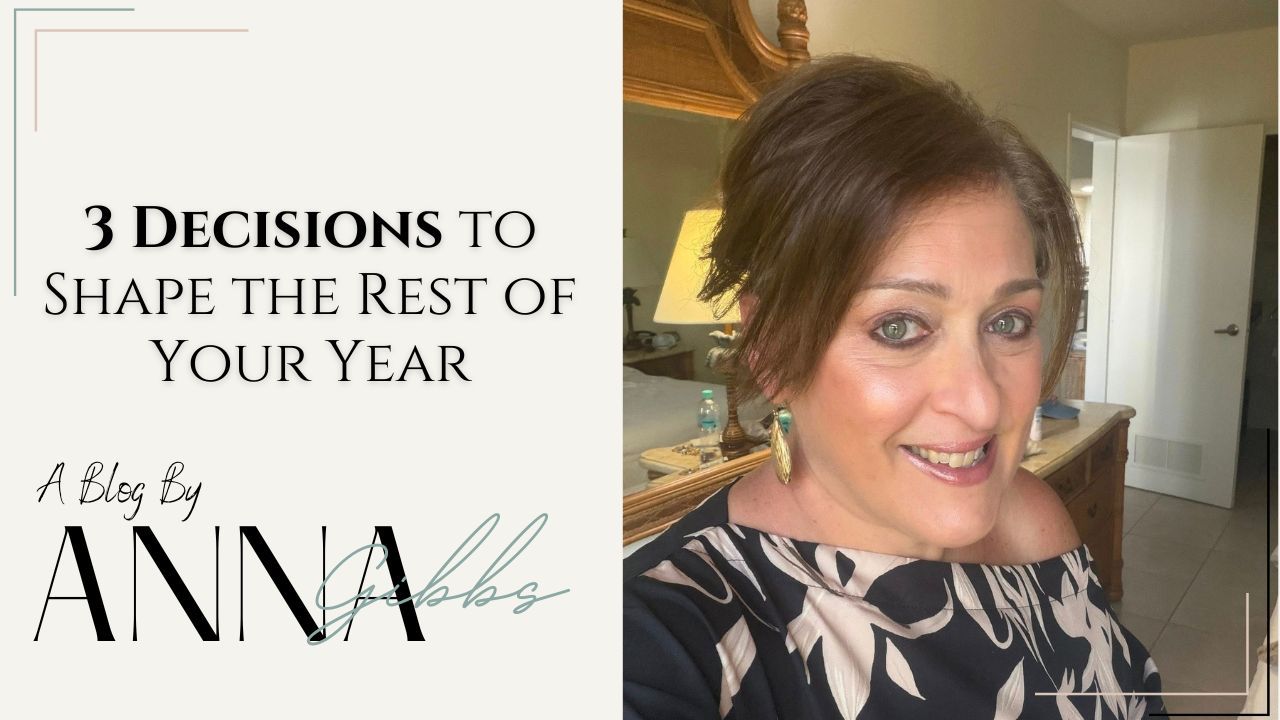
The Three Decisions That Will Shape the Rest of Your Year
We're halfway through the year.
Around this time, many people start looking at their goals and asking themselves a familiar question:
"Am I on track?"
It's a reasonable question, but I don't think it's the most important one. Because if the first half of the year taught us anything, it's that goals alone don't determine our results. Life happens and priorities shift as opportunities emerge. Challenges appear that we never saw coming.
What shapes our lives and leadership far more than our goals are the decisions we make every day. Especially the small, repeated decisions we often don't realize we're making. As I look ahead to the second half of the year, there are three decisions I believe have the power to influence almost everything else.
Decision #1: Decide What You're No Longer Available For
One of the most powerful leadership skills isn't deciding what you're going to do. It's deciding what you're no longer willing to continue.
Every commitment comes with a cost. Every yes requires time, energy, focus, and attention that can no longer be directed somewhere else. Yet many people continue carrying responsibilities, habits, obligations, and expectations long after they've stopped serving a meaningful purpose.
Perhaps it's overcommitting. Perhaps it's constantly rescuing others from problems they could solve themselves. Perhaps it's attending meetings that don't require your presence, saying yes when you really mean maybe, or continuing to invest energy into something that no longer aligns with where you're headed.
The second half of the year is an opportunity to become more intentional. What are you no longer available for? The answer may create more momentum than any new goal you set.
Decision #2: Decide What Deserves More of Your Attention
Most people don't have a time management problem, they have an “attention” management problem. Attention is one of our most valuable resources, yet many of us spend it reacting rather than directing it. We divide our focus among dozens of priorities and then wonder why the things that matter most seem to move slowly.
The leaders I admire most are not necessarily doing more. They're clearer and they understand what matters most and consistently direct their attention there.
As you look at the next six months, ask yourself:
What are the two or three areas that would create the greatest impact if they received more of my attention?
It could be your health, your leadership, your business, a relationship, a long-delayed project. A personal goal you've been meaning to revisit. Whatever it is, give yourself permission to focus. Progress often accelerates when attention becomes intentional.
Decision #3: Decide Who You Need to Become
This may be the most important decision of all.
When people set goals, they often focus entirely on what they need to do. Rarely do they stop to consider who they need to become.
The next level of growth is rarely created by adding more tasks to your calendar. It's created by developing new ways of thinking, leading, communicating, and showing up.
Maybe the second half of this year requires you to become more decisive, maybe it requires greater confidence or more courage to have the conversations you've been avoiding. It might require patience, discipline, trust, or resilience.
The question isn't simply, "What do I want to accomplish?" The deeper question is:
"Who do I need to become in order to accomplish it?"
As we move into the second half of the year, resist the temptation to simply work harder. Instead, make better decisions. Decide what you're no longer available for. Decide what deserves more of your attention.
Decide who you need to become.
Those three decisions have the potential to change not only the rest of your year, but the way you lead your life moving forward.
P.S. If you're looking ahead to the second half of the year and realizing you need more than another goal-setting exercise, coaching may be the next step.
Sometimes clarity doesn't come from thinking harder. It comes from creating dedicated space to think differently, challenge assumptions, identify blind spots, and develop a plan that aligns with where you want to go next.
If you're ready to explore what's possible for the remainder of this year and beyond, I'd be happy to have a conversation.